You've bought an apartment in Lisbon. The living room is the first space you need to get right. It sets the tone for everything else, it's the one that matters most for how the property feels, and it's the one where most international buyers make the most costly mistakes.
The sofa that looked perfect online is too large for the room. The rug is too small. The pieces are there, but they don't talk to each other. You're not sure what else to try. This happens constantly and it's almost never the fault of the pieces themselves. It's the absence of a logic that connects them before any purchase is made.
At Atelier Renata Santos Machado, all work starts with how the space will be used and with what the space actually is: its proportions, its light, its character.
What makes a Lisbon living room different
Portuguese apartments have specific characteristics that catch international buyers off guard. Ceiling heights tend to be generous, which is beautiful, but makes scale more demanding. Floor plans are often more compact than what North American or Northern European buyers are used to. The light is different: stronger, more directional, entering at angles that shift throughout the day. Materials and furniture that work in a London flat or a New York apartment don't always translate.
Getting this right requires more than good taste. It requires knowing the space and knowing what actually works in it.
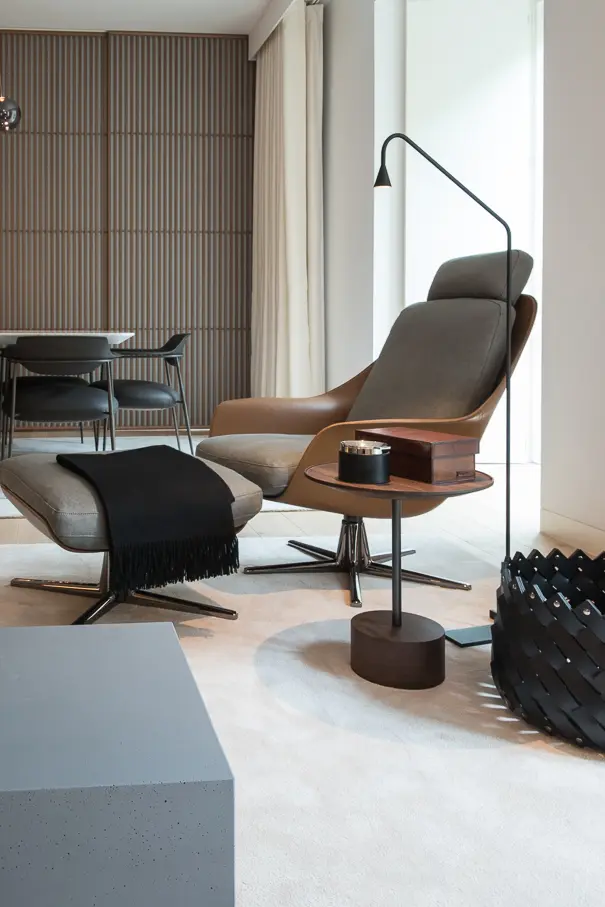
In a living room, small supporting zones help create comfort and visual rhythm. A well-integrated reading corner makes the space more functional and enjoyable to use every day.
What defines a well-resolved living room in Lisbon
A living room works when it clearly answers three things: use, comfort, and functionality.
Understanding how the space will be used is always the starting point. How will it be lived in? Do you entertain frequently? Should the room accommodate a television, reading, and remote work? Do you have young children? Pets? Each answer changes the layout entirely and in a Lisbon apartment, where space is rarely abundant, these decisions matter more than in larger homes.
Comfort is not just about the sofa. It depends on the distance between pieces, ease of circulation, the quality of light at the end of the day, the balance between volumes and textures. A space can be beautiful and uncomfortable at the same time and you feel it the moment you walk in.
Functionality means a logical layout, the right relationship between zones, and pieces suited to the intended use. Correct proportions and a clear reading of the space, where each element has a specific function without compromising the whole.
When these three things are aligned, the living room becomes a space you genuinely want to spend time in and one that photographs well for anyone thinking about rental income.
The decisions that most influence the result
Proportion and scale
Proportion and scale are by far the most common mistake and the one that catches international buyers most often. Furniture bought abroad, sized for different rooms, rarely translates to a Lisbon apartment. A sofa that's too large, a coffee table that's too small, or a rug that doesn't frame the arrangement creates imbalance that no amount of styling will fix.
Did you know that an undersized rug makes a room look more disorganised and cheaper, even when everything else is high quality? It's a simple mistake, but it has a direct impact on the perceived quality of the space. The right scale is something you feel and something that requires knowing the room before buying anything.
Another common mistake is adding more objects to solve a problem. Accumulation doesn't fix underlying issues.
Layout
Layout is decisive and one of the least visible elements. A room can have good proportions and well-chosen pieces and still not work. If you have to navigate around furniture to circulate, or if movement feels effortful, comfort is compromised regardless of the decoration. The arrangement should create flow, with defined zones and clear circulation paths. In compact Lisbon apartments, this is the foundation.
Materials
The choice of materials, colours, and textures should respond to how the space will be lived in. A living room with young children or pets calls for specific materials. What makes a space feel rich is not the value of each individual material, but how they relate to each other.
A restrained, considered selection almost always results in a more balanced space. There is also the sensory dimension: a fabric that is pleasant to the touch or a wood with warmth. These make a real difference to how a space is inhabited. In Portugal, working with local materials and suppliers also makes the process significantly more manageable.
Lighting
Lighting is what transforms a space, even when everything else is simple and restrained.
A living room needs layers of light, each with its own function:
- General light for base illumination
- Task lighting for functional zones
- Ambient light for comfort and atmosphere
- Accent light for more dramatic or scenic effect
Colour temperature is a technical detail that is frequently overlooked, with a significant impact on the final result: cool light in a living space is uncomfortable and distorts the reading of materials. Overly warm light can also shift and alter how materials are perceived. In Lisbon, where natural light is strong and warm, the artificial lighting needs to complement what the sun is already doing.
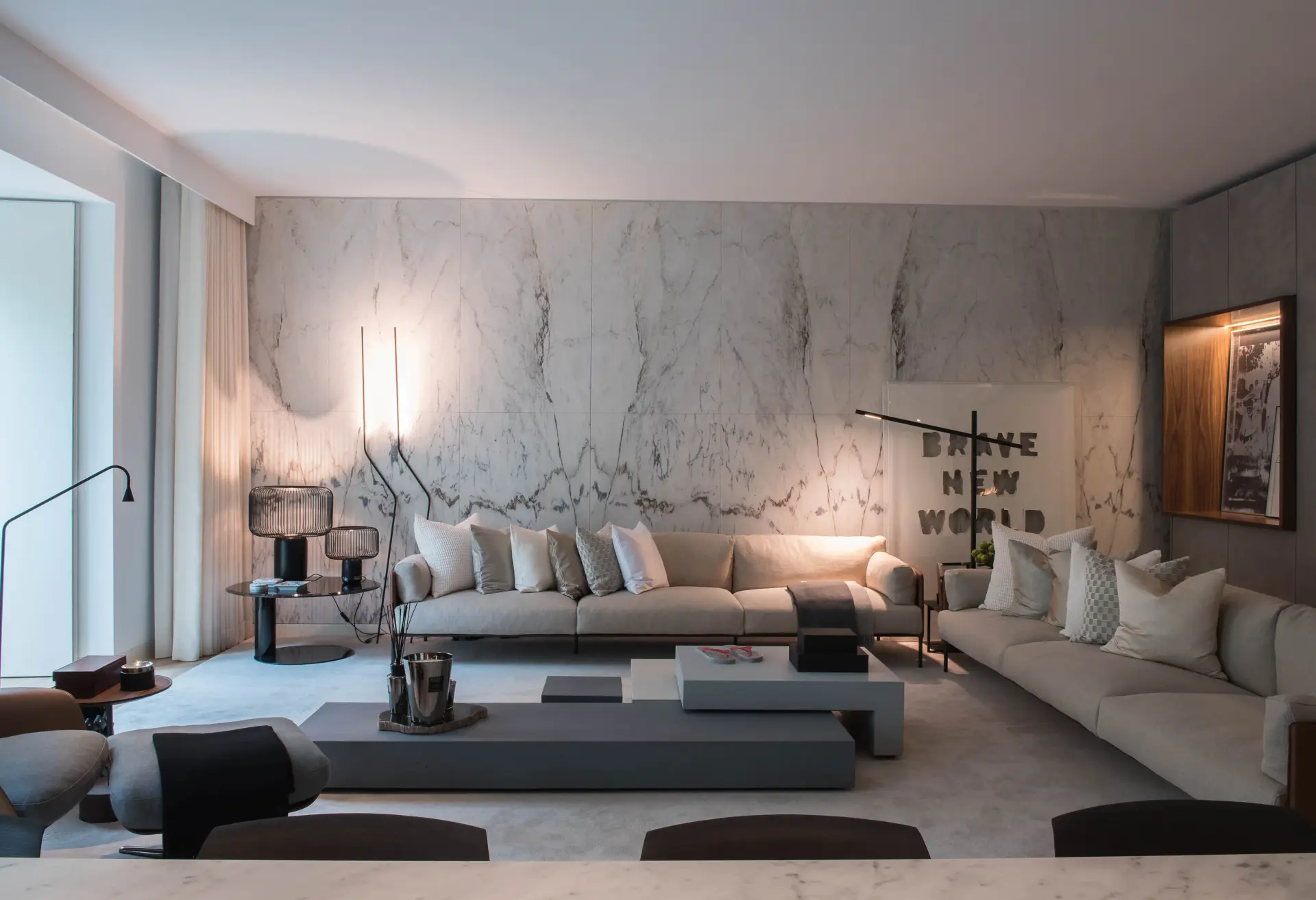
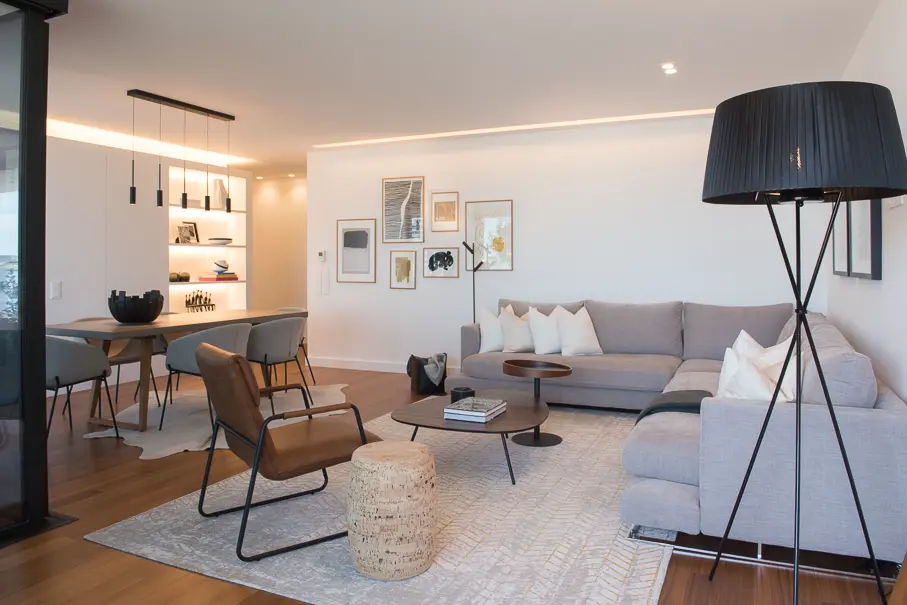
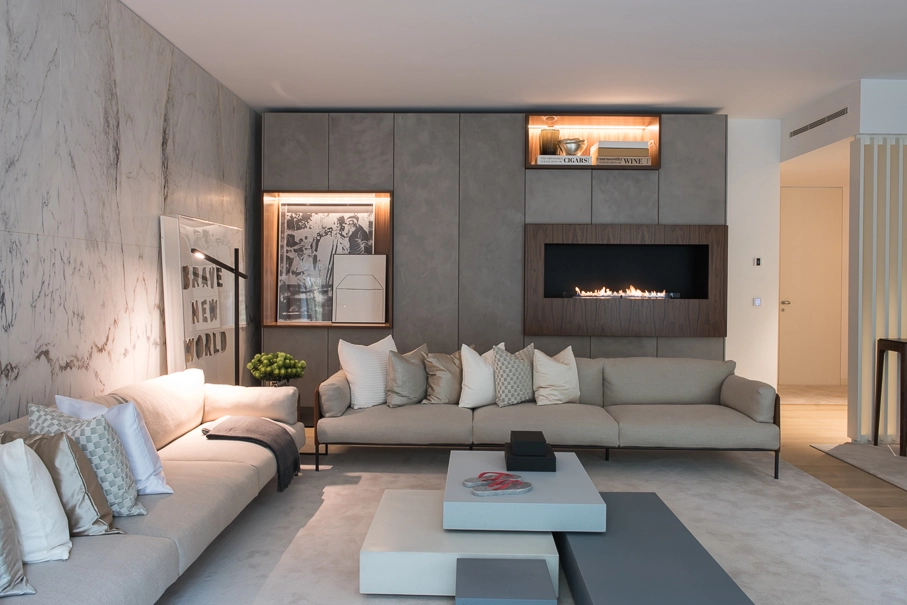
Contemporary living room with ambient lighting, balanced proportions, and carefully selected materials that create a refined and welcoming atmosphere.
Living room interior design in Lisbon at Atelier Renata Santos Machado
Identifying what's failing in a living room isn't always straightforward, especially from a distance. You can tell the space doesn't flow, doesn't feel comfortable, doesn't work the way it should. But it can be fixed.
Whether furnishing a new Lisbon apartment or refreshing an existing space, the starting point is always understanding how the room will be lived in. From there, the layout, scale, proportion, and circulation are defined before moving on to materials, pieces, and aesthetic direction. Lighting is addressed last, to wrap around the whole and set the atmosphere. This process prevents impulsive decisions and ensures coherence and it can be run entirely remotely for international clients who aren't based in Portugal.
Those who prefer a more focused starting point can begin with an interior design consultation in Portugal, enough to identify what needs adjusting and define next steps with clarity. For a complete creative project delivered without in-person visits, online interior design in Portugal is the natural format.
Atelier Renata Santos Machado develops interior design projects in Lisbon and across Portugal, from primary residences to investment properties in Cascais, Comporta, the Algarve, and beyond. Get in touch to find out what level of support is right for your space.
Frequently Asked Questions — Living Room Interior Design in Lisbon
Where do you start when decorating a living room in a Lisbon apartment?
With use: how the space will be lived in, by whom, and how often. Then layout and the scale of pieces, which in Lisbon apartments requires particular attention. Aesthetics is the last decision.
What is the most common mistake international buyers make?
Bringing furniture sized for larger homes into compact Lisbon apartments. Sofas too large, rugs too small, pieces with no scale relationship to the room. It's the most frequent mistake and the one that most compromises the result.
How do I know if my rug is the right size?
The rug should frame the main grouping: sofa, coffee table, and chairs. An undersized rug visually disorganises the space, even when the other pieces are high quality.
Can I work with Atelier Renata Santos Machado from abroad?
Yes. The Atelier works regularly with international owners of Portuguese properties remotely, with the same rigour as any in-person project.
Do I need an interior designer for a living room in Portugal?
A professional eye prevents the most costly mistakes: wrong scale, incoherent combinations, layouts that don't work. A consultation or online project may be enough or the starting point for a full interior design project.