Everyone who comes to Comporta is trying to get away from something overdone. Too much city, too much noise, too much of everything. And then they go and furnish a house that looks exactly like that.
At Atelier Renata Santos Machado, we see this constantly in Comporta and Tróia. Not from bad taste, but from good intentions applied to the wrong context. The place is right. The house is right. The interior undoes it.
What "barefoot luxury" actually demands
Comporta and Tróia are built around a very specific idea: pine trees, rice fields, dunes, a long beach, a slower pace. The aesthetic is deliberately understated and that is exactly what makes it difficult to get right.
At Atelier Renata Santos Machado, we see this often. Simplicity is misunderstood as absence.Because understated is not the same as empty. A space that feels effortless here is highly controlled. The wrong sofa stands out immediately. A ceiling light that would go unnoticed in a Lisbon apartment becomes a problem in a house by the dunes. The simpler the space is meant to feel, the less margin there is for anything that does not belong.
Clients in Comporta are not looking for a finished house. They are looking for a house that feels natural to the setting and that requires a completely different level of control. Often that control has to work at a distance too, as an interior design project managed in English for owners who are abroad.
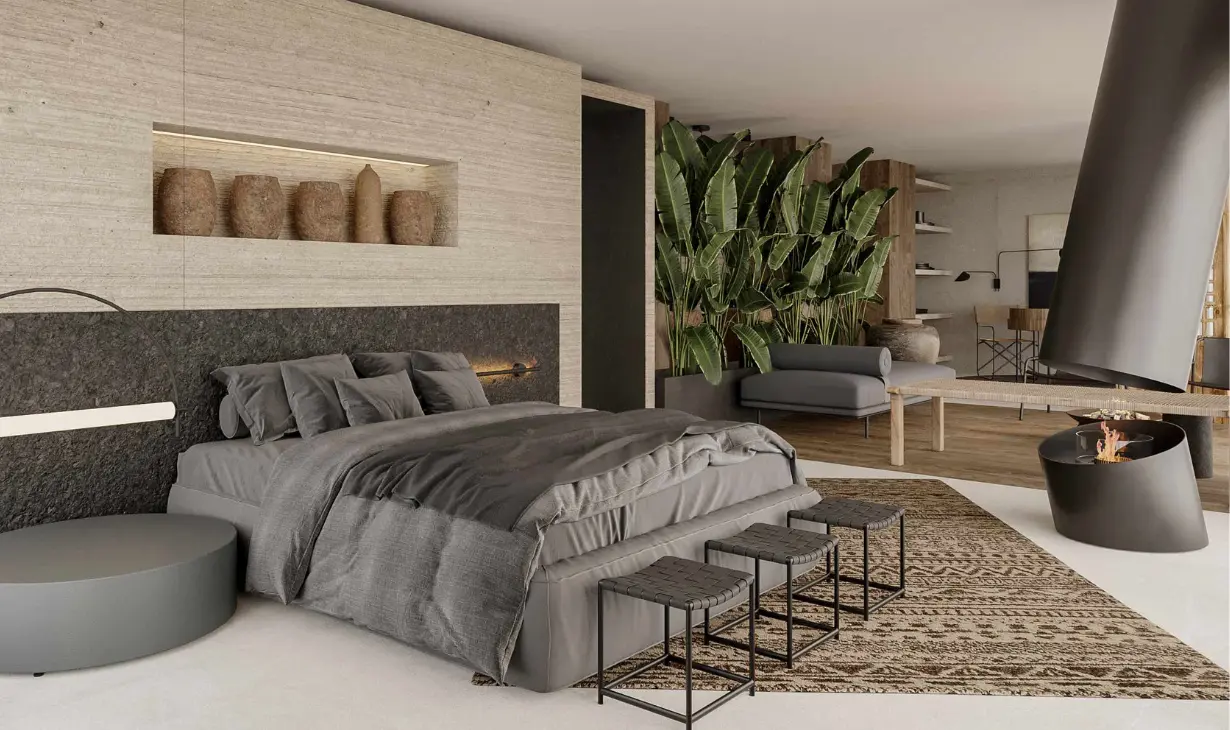
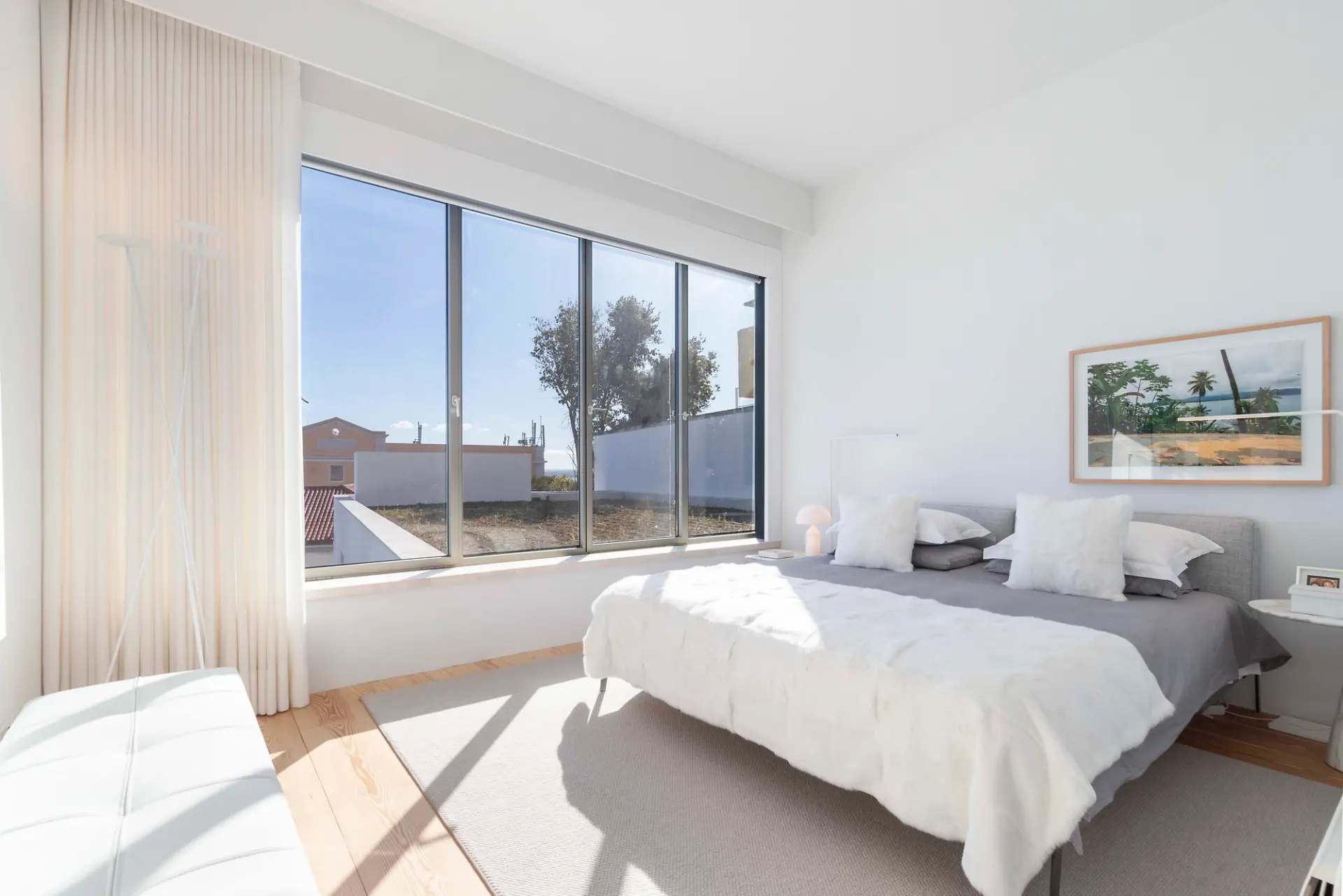
Bedroom defined by natural materials, soft textures and a calm, continuous layout. Project by Atelier Renata Santos Machado
The landscape is already doing the work
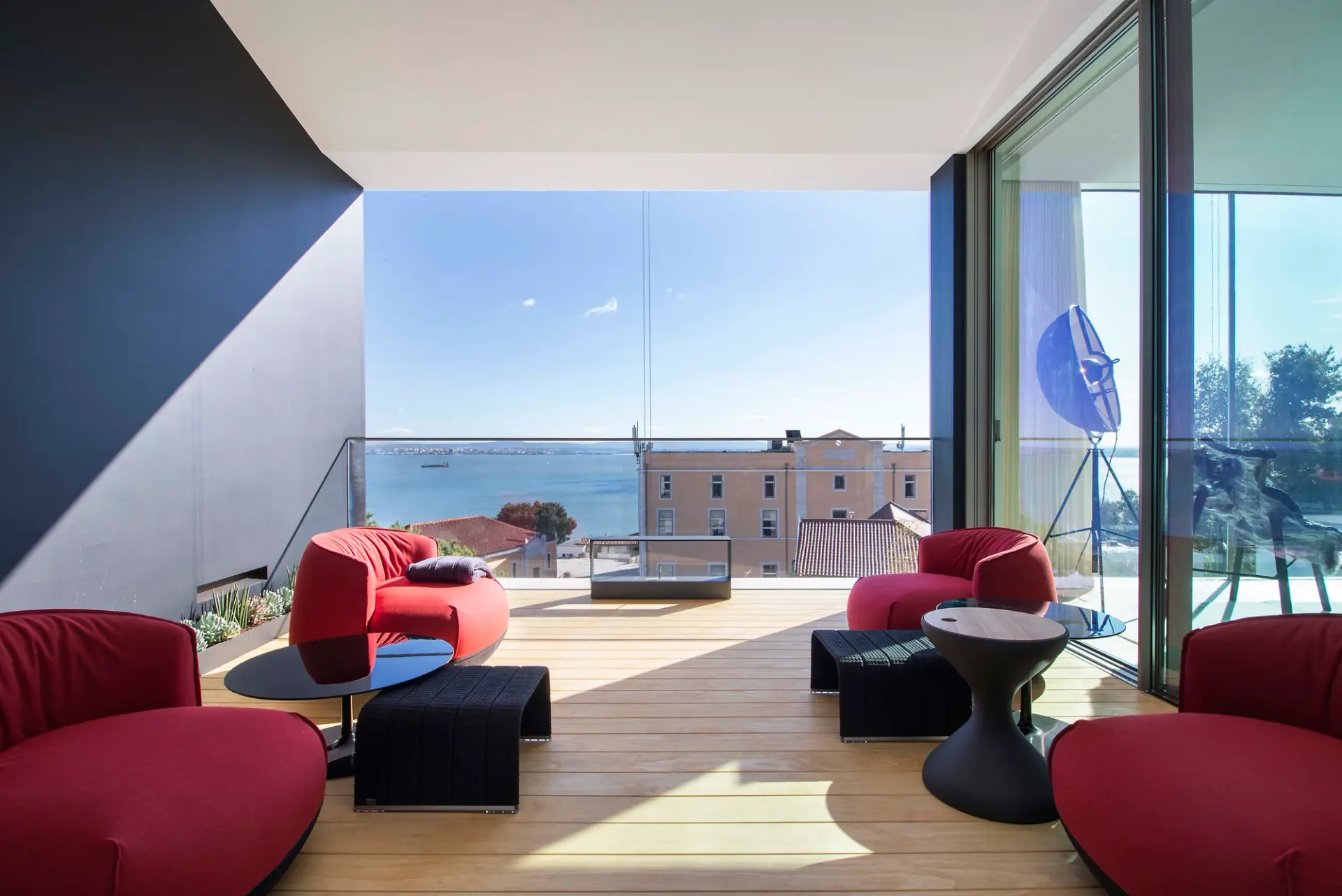
In Comporta and Tróia, the view defines the space. Pine trees, the estuary, the quality of the light throughout the day. The interior does not compete with it. It supports it.Which means every decision has to be made in context. What works in a different setting can feel completely out of place here. Not because it is wrong in itself, but because it does not belong to this environment.
The challenge is not choosing “the right materials”. It is knowing how each choice will read against the landscape, the light, and the way the space is used. The simpler the space is meant to feel, the more exposed every decision becomes.
Comporta and Tróia are not identical, and that matters. Comporta is more organic: dispersed, quieter, more embedded in the landscape. Tróia is more structured: a peninsula, a resort, more defined in its architecture. The lifestyle is similar. The design response is not. Knowing the difference before starting is part of the job.
A house that has to work when you are not there
Most buyers in Comporta and Tróia are not there full time. The property is used seasonally, which means it has to work without constant presence.
Without a structured local process, this is what the project looks like: decisions made from photographs, coordination over WhatsApp with suppliers who do not speak English, deliveries that arrive when no one is there to check them. A painter and a furniture team booked on the same day who cannot both work at once. Every problem that gets resolved in five minutes on site becomes a three-day chain of messages from another country.
The cost is rarely in one mistake. It builds: materials chosen without seeing them in context, a piece reordered because the first arrived damaged and nobody was there to refuse it, work redone because the specification was not followed. None of it is catastrophic on its own. Together, it is significantly more expensive than having someone there who knew what they were doing from the start.
Done properly, the house should be exactly as you left it every time you arrive. No adjustments. No surprises.
For international buyers managing this from abroad, the guide to working with an interior designer in Portugal from abroad covers what that process looks like in practice.
What to look for in an interior designer in Comporta
Understanding the place and how the house will be lived in. In Comporta, the question is not just whether something is beautiful, but whether it belongs to the setting and to the way the space will be used. What works in a Lisbon apartment or in the Algarve can feel out of place here, not only visually but in how it functions day to day.
Understanding what holds up over time. Salt air, humidity, and periods of low use change how decisions perform. What looks right in a showroom is not always what works in practice. Experience means knowing that difference before anything is ordered.
A process that works across distance. Most clients with properties in Comporta and Tróia are not nearby. If there is no structured local process, someone who manages suppliers, deliveries and installations on the ground, the client ends up handling it from their phone, from another country, on a weekend. That is not what they bought a house in Comporta for. The full-service studio model is what makes remote management actually work. What that coordination involves, from briefing to final delivery, is covered in the guide to turnkey interior design in Portugal.
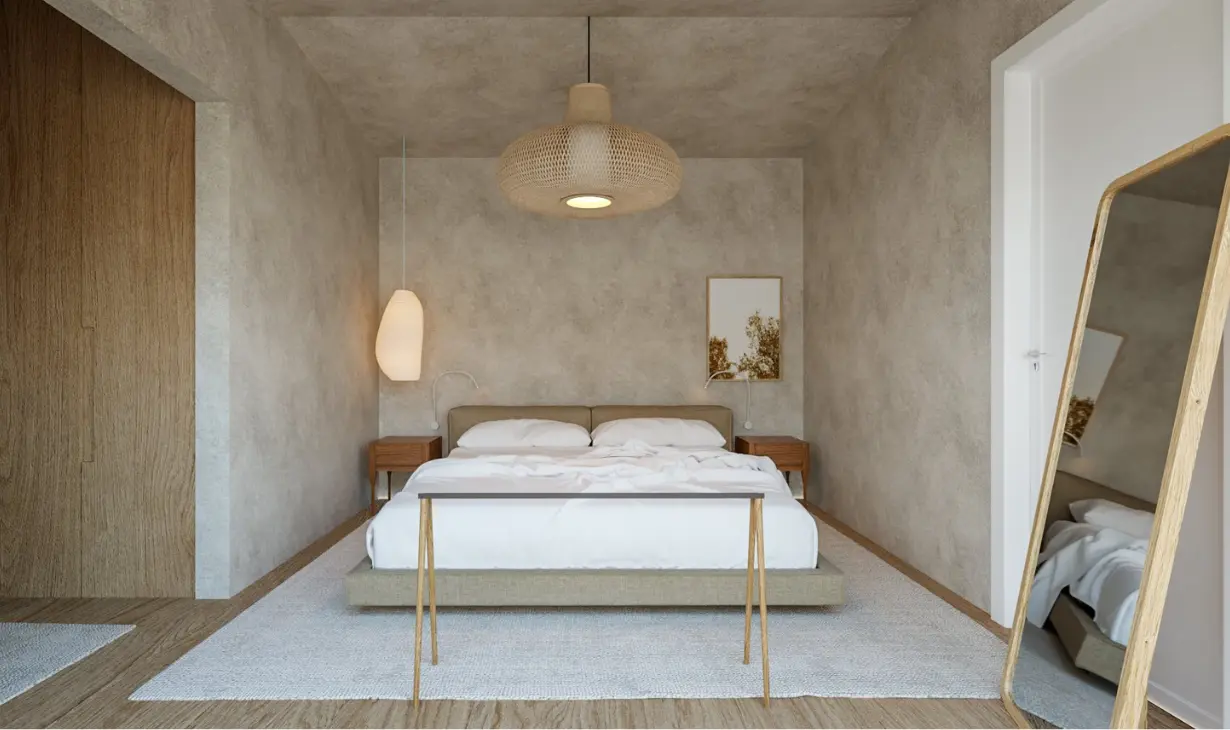
Bedroom with restrained palette, natural light and a balanced, uncluttered composition. Project by Atelier Renata Santos Machado.
Atelier Renata Santos Machado: Interior Design in Comporta and Tróia
Atelier Renata Santos Machado develops residential projects across Comporta, Tróia, Lisbon, Cascais, Óbidos, and throughout Portugal. Over 24 years, a local supplier network, and a full process from first brief to final delivery. For clients looking at the premium end of the market in Portugal more broadly, the guide to luxury interior design in Portugal covers what that level of service involves.
In Comporta, the starting point is always the same: understanding what the place requires, how the house will be lived in, and wha
t should be left untouched.
If you are considering a project in Comporta or Tróia, the first step is simple: a conversation to understand the space, how it will be used, and what it should feel like when you walk in.
Interior design in Comporta and Tróia: our project, how we work and how to get in touch
The atelier has worked in Comporta and knows what the area asks of materials and logistics. This page describes the full turnkey service, from concept to delivery.
Frequently Asked Questions - Interior Designer Comporta, Portugal
What makes interior design in Comporta different from other areas of Portugal?
Restraint. Comporta and Tróia have a very specific character, and the interior has to support it, not compete with it. Less is not simpler. It is harder.
What materials work well in Comporta and Tróia?
Decisions that respond to the setting and to how the house is used. What looks right in a showroom does not always work in practice.
I only use the house a few weeks a year. Does it still make sense to hire an interior designer?
More so. The house has to work from the moment you arrive, with no adjustments or surprises. That requires planning around how it is actually used.
Can a project in Comporta be managed remotely?
Yes. With a structured local team and a clear approval process, the project can be managed entirely on behalf of a client who is not in Portugal.
Do you work in Tróia and Melides as well?
Yes. Atelier Renata Santos Machado develops projects across the full Comporta area, including Tróia, Melides, and the surrounding coastline, as well as throughout Portugal.