When people say they're looking for an interior design studio in Portugal, they often mean something quite vague: a team, a name, somewhere to call. The word studio implies a certain scale, a certain level of service. What it actually implies, and what separates a studio that delivers from one that doesn't, is something most clients only discover mid-project.
Nobody wants to spend their weekends chasing a supplier about a delayed delivery. But when you're doing it from another country, you're not just chasing a supplier. You're doing it across time zones, without being able to walk over and check, entirely dependent on whoever happens to be on site. When the wrong material arrives, you find out by WhatsApp. When a decision needs to be made urgently, it either waits or gets made without you. And when the sofa doesn't fit through the door, nobody is there to resolve it.
A studio is not just a designer with an office and employees. It's a model of working. The distinction matters.
One team. One process. One point of accountability
A freelance designer handles the creative brief and advises on choices. Coordination, sourcing, logistics, and site supervision are often managed separately, by the client, by a contractor, or by no one in particular.
A full-service interior design studio in Portugal handles all of it under one roof. Concept through delivery. Design, material selection, procurement, supplier coordination, installation, and final styling. Nothing falls between two people's responsibilities because there is only one team responsible.
That integration sounds simple. In practice, it is what prevents most of the problems that derail interior design projects: wrong materials arriving late, furniture that doesn't fit through the door, work that has to be redone because the specification wasn't communicated clearly.
When something goes wrong, and something always does, a studio with a structured process has the supplier relationships and the site presence to fix it without the client having to manage it. At Atelier Renata Santos Machado, if something goes wrong with a supplier or an installation, the atelier resolves it directly. The client receives the space in perfect condition.
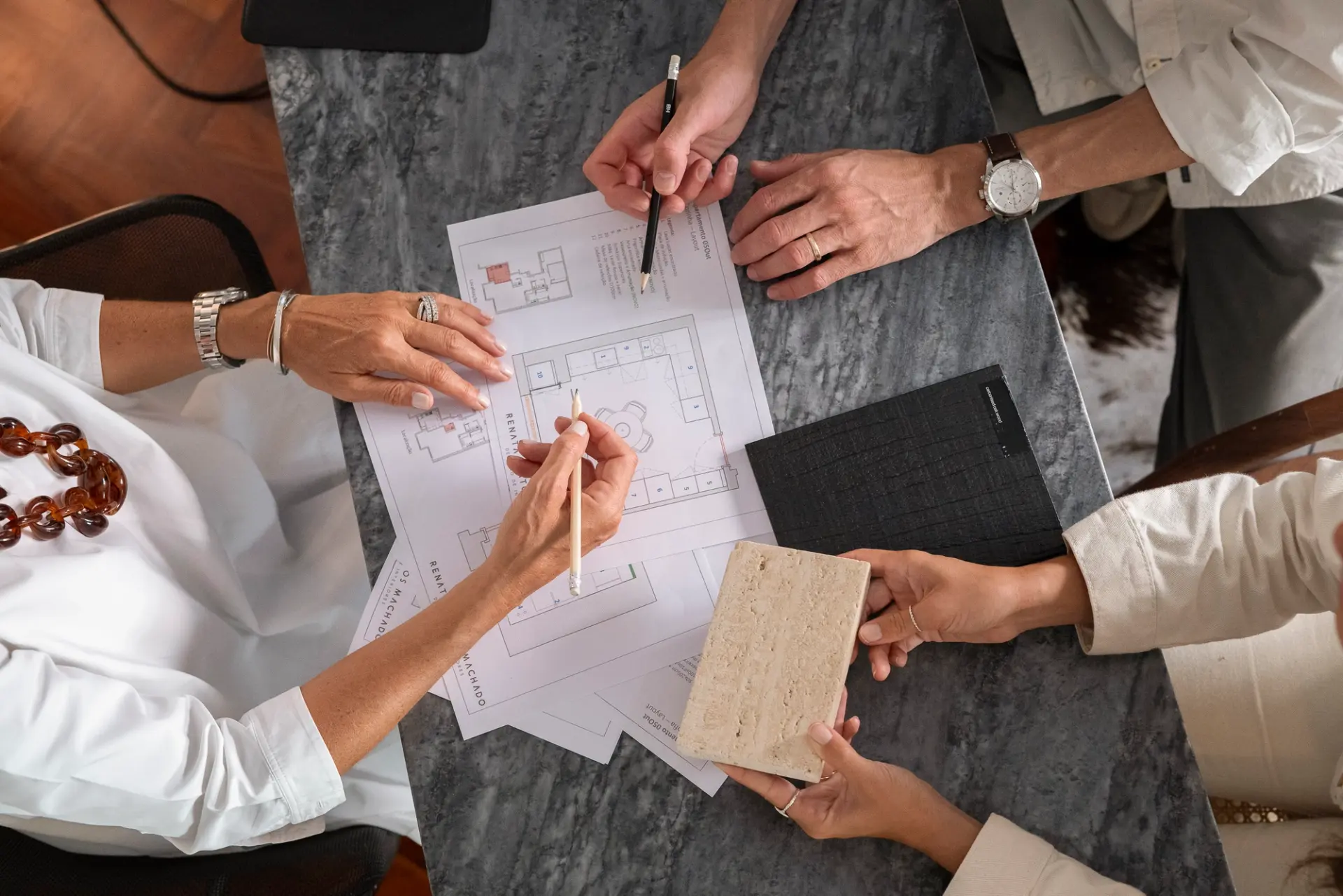
Design process detail, where decisions are reviewed and aligned as a team
What full service actually means
"Full service" is used loosely. It's worth being precise about what it includes.
Design. Briefing, concept, moodboard, layout, material and furniture selection. The creative layer that defines what the space will be.
Sourcing and procurement. Showroom visits, material analysis in person, multiple quotes for the same item compared not just on price but on quality, lead time, and delivery terms. We spend the day contacting suppliers, reviewing catalogues, and comparing options. The client sees only what makes sense for their project and their budget. The global budget is confirmed and approved before any order is placed.
Execution coordination. Managing the sequence of works and deliveries, communicating technical specifications to contractors, resolving issues on site without escalating them to the client.
Final styling. Not a decorative gesture. A technical step, adjusting heights, alignments, proportions, the balance between elements, that determines whether the space feels resolved or unfinished. A fabric that arrives in the wrong shade is not a minor detail. Neither is a painting hung three centimetres too high.
The client approves each stage. The studio coordinates everything between approvals.
Why this matters more for some projects than others
For a client based abroad, buying a property in Lisbon, Cascais, the Algarve, or elsewhere in Portugal, a full-service studio model is the only model that works. Remote management without a local team that holds full responsibility creates gaps. And gaps become expensive.
For the specifics of how international clients manage interior design projects in Portugal, the guide to working from abroad covers what the process looks like in practice.
For a complex renovation, where structural decisions and decorative choices have to be developed in parallel and in sequence, fragmented coordination is where most projects come apart. The guide to turnkey interior design in Portugal explains how each phase connects to the next.
What to look for in an interior design studio in Portugal
Four things that separate a studio that works from one that merely looks the part.
Integrated process, not assembled process. Design, sourcing, and execution developed together. Not passed between different parties who may never speak to each other.
Budget discipline. Nothing ordered without a confirmed, approved budget. No surprises at handover.
A local network built over years. Contractors, craftsmen, suppliers who are known, trusted, and available when something needs resolving quickly. This is what makes the difference between a studio that recovers from problems and one that stalls.
One point of contact throughout. Not a rotating team. Not a junior who forwards messages. The person who understood the brief is the person who walks the site.
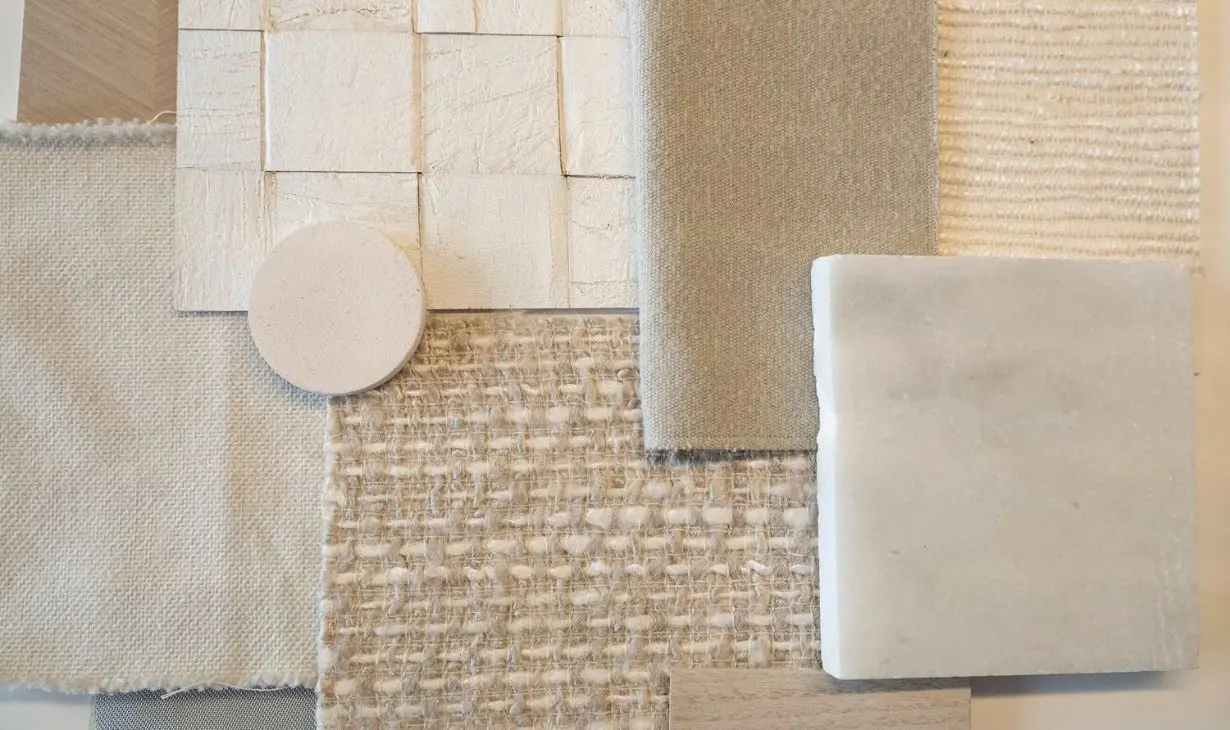
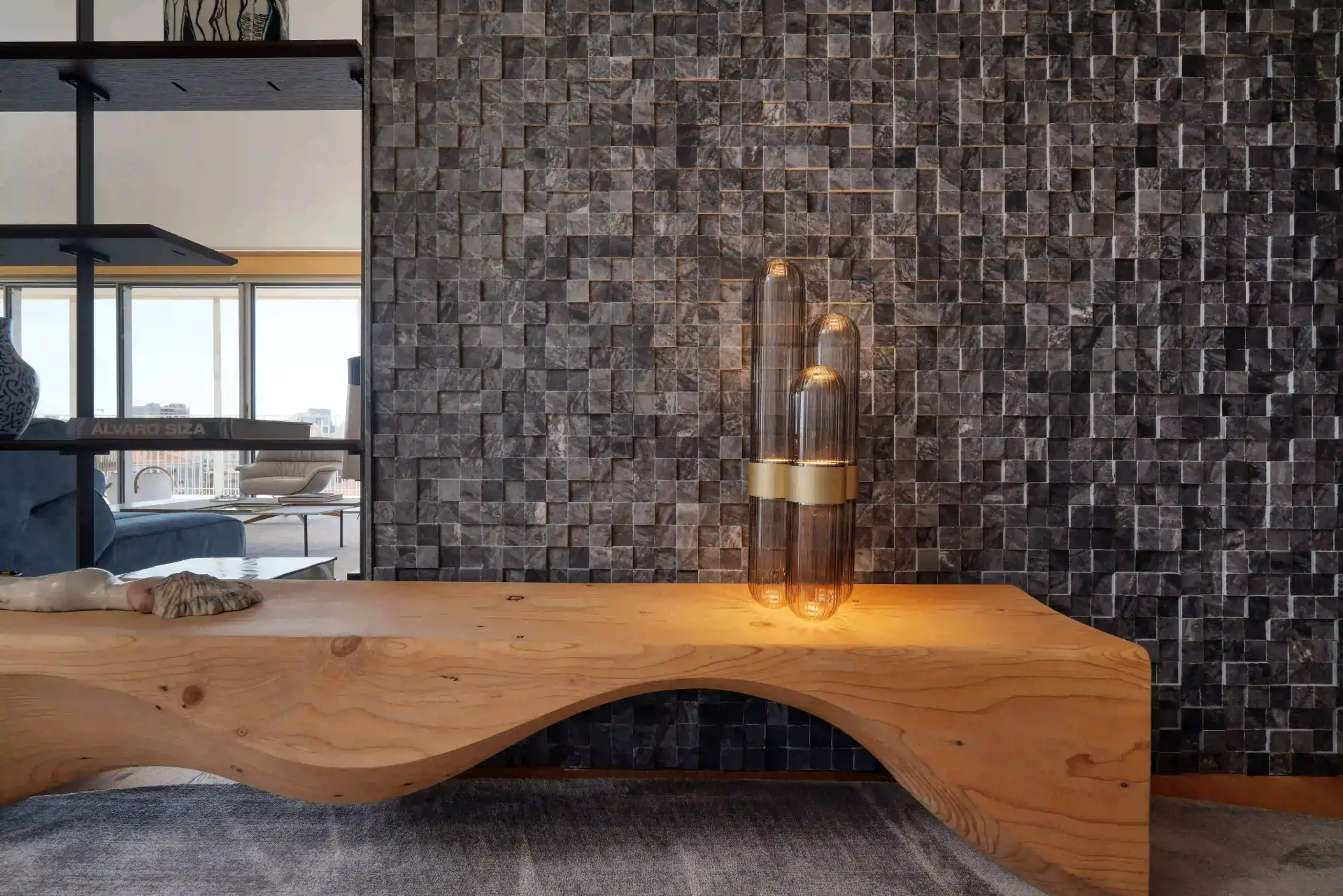
Material selection and sourcing process by Atelier Renata Santos Machado, where textures, finishes and samples are reviewed before final specification and procurement.
Atelier Renata Santos Machado: Interior Design Studio in Portugal
With over 24 years developing residential projects across Portugal, Atelier Renata Santos Machado operates as a single point of responsibility from first briefing to final delivery. Design, sourcing, coordination, and execution under one team, so nothing falls between two people's responsibilities, and nothing moves without the client's approval.
For international buyers with properties in Lisbon, Cascais, the Algarve, and throughout Portugal, this is what the studio model means in practice: you don't need to be present. You need to know that someone is and that when something needs resolving, it gets resolved without coming back to you.
If you are considering an interior design project in Portugal and want to understand how this could work for your property, the first step is a conversation.
Frequently Asked Questions - Interior Design Studio Portugal
What is an interior design studio?
A team that handles the full process — concept, material selection, sourcing, coordination, and final delivery — under one roof. The key distinction from a freelance designer is integration: design, procurement, and execution are managed by the same team, with one point of accountability throughout.
What does full service mean in interior design?
It means the studio manages every phase: briefing, concept, layout, material selection, sourcing, supplier coordination, construction oversight, and final styling. The client approves each stage but does not manage the process.
What is the difference between a boutique interior design studio and a large firm?
Scale and model. A boutique studio typically means a smaller, more specialised team where the principal designer is directly involved in every project. What matters more than size is process discipline: who is responsible for what, and who the client calls when something goes wrong.
Can an interior design studio in Portugal manage a project for international clients?
Yes, with the right model. A full-service studio with a structured approval process and a local supplier network can manage a project entirely on behalf of a client who is not present. The client approves remotely. The studio coordinates locally.
How do I know if a studio is genuinely full service?
Ask about process, not portfolio. How are approvals documented? Who coordinates suppliers and contractors? What happens when something goes wrong? A studio that answers those questions clearly has actually run full-service projects. One that only shows photographs probably hasn't.